

The Material Cycle and Me
https://static1.squarespace.com/static/5825f79f59cc6805946db437/t/589b3f45be6594fd41fa4be6/1486569286867/Materials%2BCycle%2B-%2B3-5_lessonplan.pdf
https://static1.squarespace.com/static/5825f79f59cc6805946db437/t/589b3f45be6594fd41fa4be6/1486569286867/Materials%2BCycle%2B-%2B3-5_lessonplan.pdf
Cloud Institute for Sustainability Education and Learner-Centered Initiatives
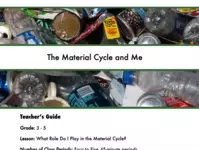
This learning activity takes four to five 45 minute class periods.
Learn more about Teaching Climate Literacy and Energy Awareness»
 See how this Activity supports the Next Generation Science Standards»
Grade Level
Online Readiness
Topics
Energy Literacy
This Activity builds on the following concepts of Energy Literacy.
Click a topic below for supporting information, teaching ideas, and sample activities.
Notes From Our Reviewers
The CLEAN collection is hand-picked and rigorously reviewed for scientific accuracy and classroom effectiveness.
Read what our review team had to say about this resource below or learn more about
how CLEAN reviews teaching materials
Teaching Tips | Science | Pedagogy |
Technical Details
Teaching Tips
- Students learn where garbage ends up and their part in the material cycle.
- Consider creating graphs, incorporating all the resources in the lesson.
- Connect reasons for recycling/reducing/reusing to global climate change/planet warming. Talk about carbon emissions.
- The teacher should monitor the garbage can/garbage that is being emptied and dissected (it could get messy), and allow time for hand washing.
About the Content
- Students are engaged in learning more about the different types of waste (products created by humans vs products found naturally in the environment) and ways we can minimize waste through reusing, reducing, and recycling.
- Each group is responsible for a room in the school and learns where all the garbage goes. Students look at waste found in a garbage can at school, waste generated at a landfill, and waste found on various posters. Students make lists of waste and determine what type of waste it is.
- No data is used, however this activity could lend itself well to creating different types of graphs.
- Passed initial science review - expert science review pending.
About the Pedagogy
- This lesson is engaging and provides areas to explore, create proposals, and present the data to school administrators. The lesson guide is clear and concise.
- This lesson is taught over 5 different days, it includes a whole group discussion and small group activities.
- There is not a separate teacher's guide, but the lesson does include a rubric for assessment of students' understanding of the topic.
- This resource engages students in using scientific data.
See other data-rich activities
Technical Details/Ease of Use
- The lesson plan is clear and uses materials readily available to study the impacts that students have on the materials cycle.
- No cost is associated with this lesson.
- Some of the resources are incorporated into the lesson, while others are not.
- Print the posters (or locate them) in advance for the carousel.